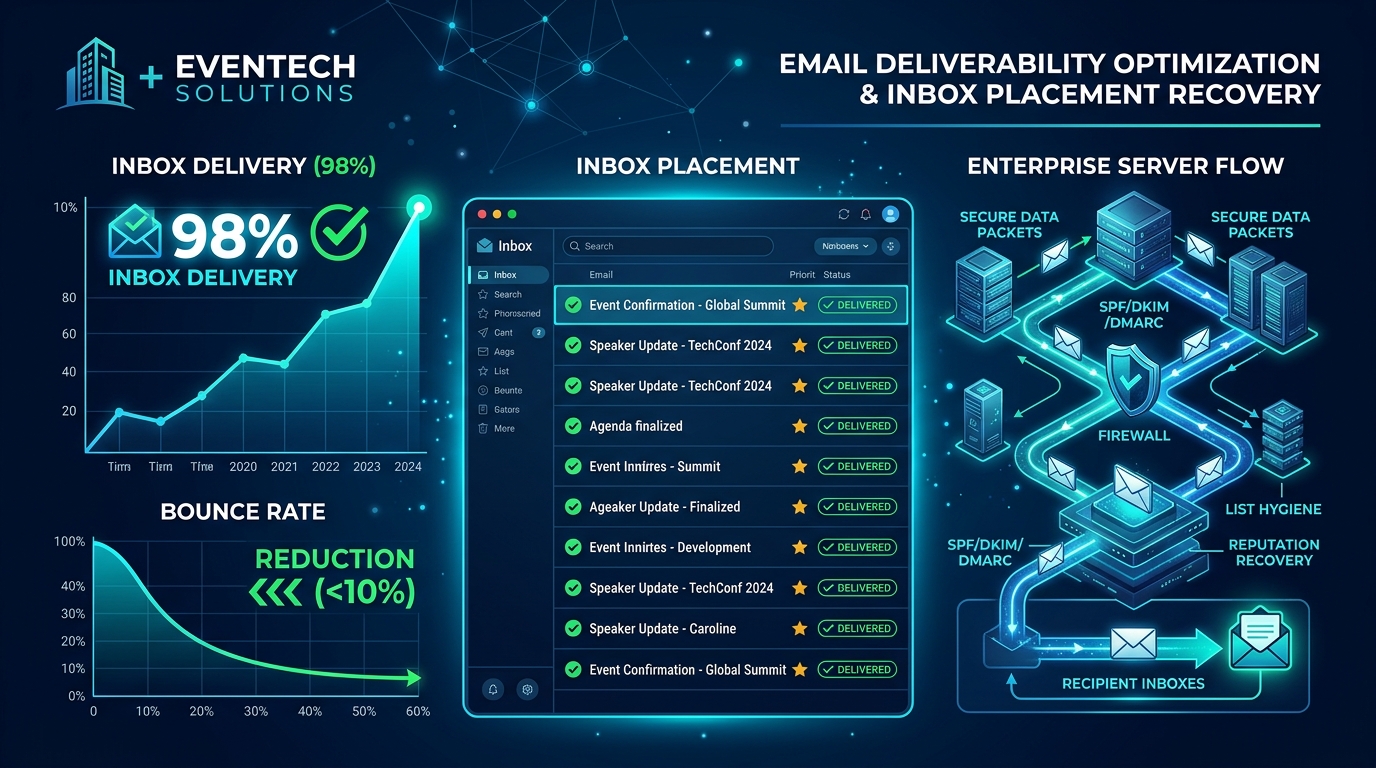
For a startup preparing to launch, email infrastructure often gets pushed aside despite its critical role in customer experience. Discover how Code & Clicks helped a UAE-based fintech startup build a scalable, segregated email architecture before launching its first marketing campaign.
The Requirement: Build the right email infrastructure from the ground up
For a startup preparing to launch, hundreds of priorities are competing for attention. The product needs to work, customers need to be onboarded, the brand needs to go to market, and the technology needs to be ready. Amid these priorities, email infrastructure can easily become something to address later, despite its importance to the customer experience and future marketing activity.
For this UAE-based fintech startup operating in a regulated environment, the requirement was clear: design and implement an email infrastructure from the ground up, ready to support its minimum viable product (MVP), customer communications and future marketing activity.
The business was preparing to launch its platform and had not yet sent a marketing campaign. This presented an opportunity to establish the right foundations before send volumes increased and additional applications, platforms and communications were introduced.
Once an organisation starts sending emails from its domain, its authentication, sending patterns, and reputation become key in deliverability. Designing the infrastructure before launch can help reduce the need for disruptive changes later.
The startup needed to support two distinct types of communication:
- Transactional and application emails: Included account verification, password resets, customer notifications, and platform updates. These communications were essential to the customer journey and needed to reach users reliably and promptly.
- Marketing emails: Included newsletters, product announcements, launch campaigns, customer education, and future promotional communications. These required a separate, well-structured sending environment that could support marketing activity without unnecessarily affecting critical transactional messages.
The requirement was therefore not just to get email working. It was to build an architecture that could support both streams, meet the startup’s technical needs, and provide a foundation for growth.
One coordinated partner for growth and technology
The Code & Clicks UK and NorthSky partnership brought the capabilities needed for this project together under one coordinated engagement. The Code & Clicks UK focuses on the front end of growth, including marketing strategy, customer communications and future campaign requirements. NorthSky brings the back-end technology expertise, covering infrastructure, system configuration and technical integration.
This meant the client didn’t need to coordinate separate providers for its marketing requirements and underlying technology. Both sides could be considered together from the outset, ensuring the infrastructure would support not only the platform launch but also the business’s future growth plans.
The Objective: Build the foundation before the first campaign
We designed an email architecture to support the startup through its MVP launch and beyond. The objectives were to:
- Support reliable transactional and application communications
- Establish a separate environment for marketing communications
- Put appropriate sender authentication and reputation-building practices in place from the outset
- Account for the technical requirements of operating in a regulated fintech environment
- Test email functionality with early users and beta testers
- Create an architecture that could scale as the customer base grew
- Allow for future integration with CRM and marketing automation platforms
- Reduce the likelihood of a major infrastructure rebuild as the business evolved
Most importantly, the business needed confidence that its critical customer communications would work when the platform went live.
Our Strategy: Build for the business they were becoming, not just for today
We started by looking beyond the immediate MVP requirements. Instead of asking “hey, how do we send these emails?”, we started asking “what should the email ecosystem look like when this business has thousands of customers, multiple applications, and a full marketing operation?”
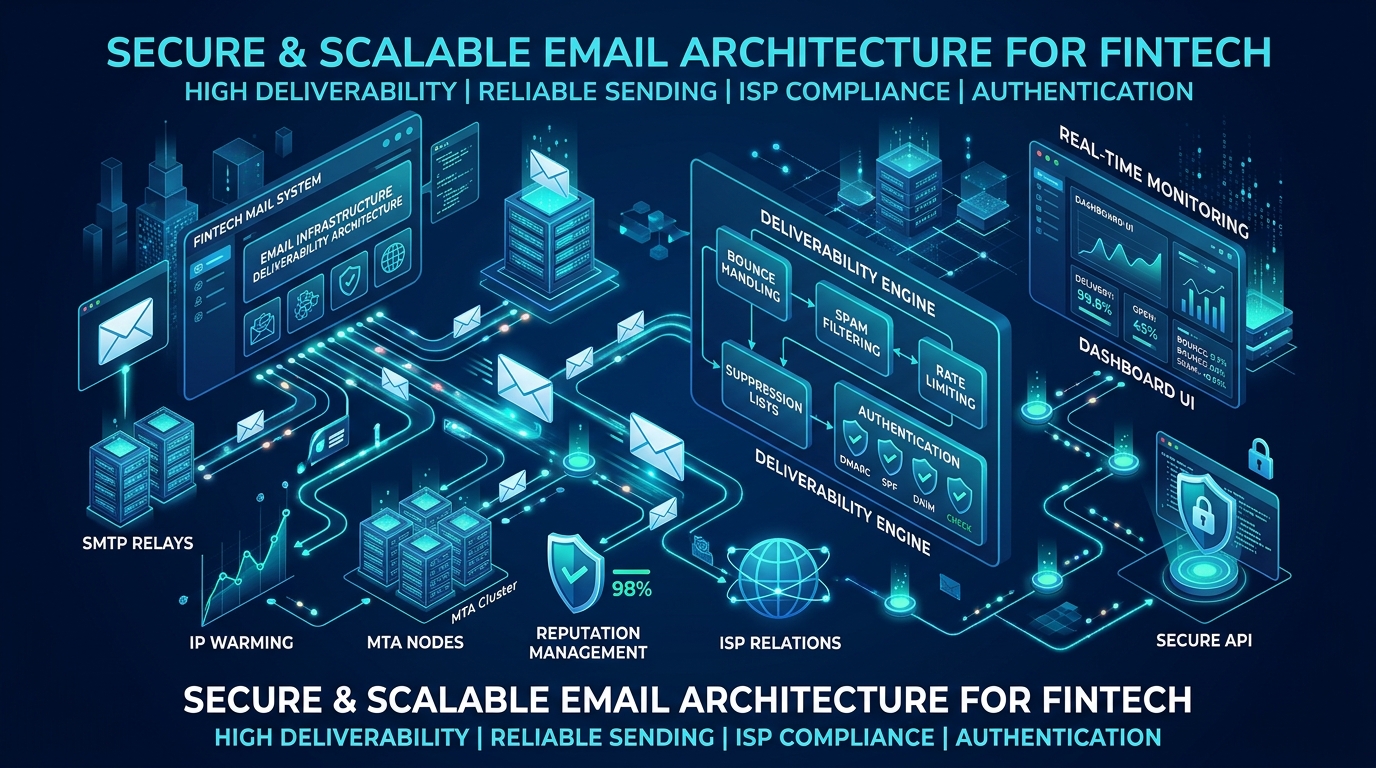
The Code and Clicks UK designed the architecture around segregation, authentication, deliverability, and scalability. We treated transactional and marketing communications as separate streams, allowing each to serve its purpose without unnecessarily affecting the other. We also chose SendGrid as the email delivery platform and built the supporting configuration from the ground up.
Our aim here was simple: get the foundations right before volume, complexity, and growth made them harder to change.
The Solution: A segregated email architecture built for launch and future growth
We designed and implemented the email infrastructure from the ground up, including the technical configuration required to support the startup's MVP.
We created distinct environments for transactional/application communications and marketing emails, establishing a clearer structure for managing different sending purposes and providing greater control as the business prepared to introduce marketing campaigns. Separating these streams reduced the risk of marketing activity unnecessarily affecting critical customer communications, although deliverability still depends on factors such as sending practices, authentication, recipient engagement, and complaint rates.
We configured the underlying email infrastructure, including:
- Domain and subdomain architecture.
- DNS records and configuration.
- SPF (Sender Policy Framework).
- DKIM (DomainKeys Identified Mail).
- DMARC (Domain-based Message Authentication, Reporting and Conformance).
- Application-level authentication and sending configuration.
- SendGrid platform configuration.
These settings were designed to help mailbox providers authenticate the sender and assess incoming messages, thereby establishing them correctly and reducing the likelihood of needing to retrofit core settings after launch.
Before the MVP went live, we tested the infrastructure against practical customer scenarios, including account verification, password resets, application notifications, and other transactional communications. Testing covered the configured sending scenarios and delivery across major mailbox providers. We also worked with the startup’s MVP beta testers to validate the email experience in a live testing environment, rather than relying solely on technical configuration checks. This confirmed that essential messages could support the customer journey as intended during the MVP testing phase.
We put appropriate sending practices and monitoring processes in place ahead of wider email activity. This included a controlled approach to building sending history where required, alongside monitoring designed to help identify potential deliverability issues as sending activity developed. With no marketing campaigns launched yet, the priority was to prepare the infrastructure for responsible growth rather than introduce high sending volumes prematurely. The objective was to give mailbox providers a consistent, authenticated sending environment and build a foundation from which the business could develop its sender reputation over time.
The Results: A green MVP email environment and a growth-ready foundation
By the time this startup began testing its MVP with beta users, its email delivery environment already showed strong performance. Key outcomes we were able to achieve included:
- Green delivery status: The MVP email environment delivered successfully across the tested use cases and major providers.
- Reliable transactional communications: Account verification, password resets, and application notifications were successfully delivered to beta testers.
- Segregated email architecture: Established for both transactional and marketing communications, creating a more controlled environment for future growth.
- Positive sender reputation: Built systematically before launching marketing campaigns at scale.
- Future-proof architecture: Designed to accommodate future CRM, marketing automation, and additional email platforms without rebuilding the core infrastructure.
The business had built the infrastructure first, so its future marketing activity could start from a stronger technical foundation.
What changed for the client?
Before the project, email was one of the components that needed to be switched on before launch. By the end of the project, the client had an email architecture that addressed both immediate operational needs and future marketing requirements.
The business could approach its next stage with a clearer understanding of the components behind effective email communication: infrastructure, authentication, sending reputation, deliverability, content, customer experience and ongoing optimisation.
Just as importantly, the client had a coordinated approach to the technical and marketing sides of email. With the infrastructure designed around the business’s future needs, it could move with the launch and plan marketing activity without first coordinating with a separate provider to build the underlying systems.
The bigger lesson: Growth starts long before the first campaign is sent
Most businesses think email begins with content, but in reality, it begins much earlier.
It starts with the domain, DNS, authentication, sending architecture and reputation that determine whether your communications can reliably reach the people they're intended for. And for startups, this is particularly important, because waiting until you're sending thousands of emails to discover that your architecture needs to change can make an already complex problem much harder to solve.
The best time to build a scalable email infrastructure is before you need to scale it. That's why The Code & Clicks UK looks beyond individual campaigns and marketing platforms. We connect strategy, marketing, and technology to build the systems that allow businesses to launch confidently and grow without constantly rebuilding the foundations underneath them.
What businesses can learn from this
- Build infrastructure before you build volume: Email systems are easier to design correctly before multiple platforms, applications and sending streams become embedded in the business.
- Transactional and marketing email serve different purposes: Separating the two can provide greater control over the sending environment and help protect critical customer communications.
- Technical foundations are part of the customer experience: A password reset that never arrives isn't just a technical issue. It's a customer who may be unable to access your product.
- Build for where the business is going: The right infrastructure should support today's requirements while leaving room for tomorrow's CRM, automation, marketing and customer growth.
Is your technology ready for your next stage of growth?
At The Code and Clicks UK, we help businesses build the strategy, technology, and growth infrastructure they need to launch, grow and scale with confidence.
Book a Strategy Call